Built a machine-readable brand specification, integrated with AI workflows, so a single design system can generate everything from a sales brief to a finished, print-ready brochure, without a designer assembling it by hand.
The problem: Every comparison document, every internal one-pager, every strategic brief that needed to look and sound on-brand ran through me, one person, one queue. That doesn't scale past a certain point, and I was the bottleneck. So I converted the brand system itself into something a machine could execute against, then built the tooling on top of it.
The result: Infrastructure, not a one-off automation, in active use, not a proof of concept.
Built on: Claude, n8n, Atlassian Rovo, RunwayML, NanoBanana.
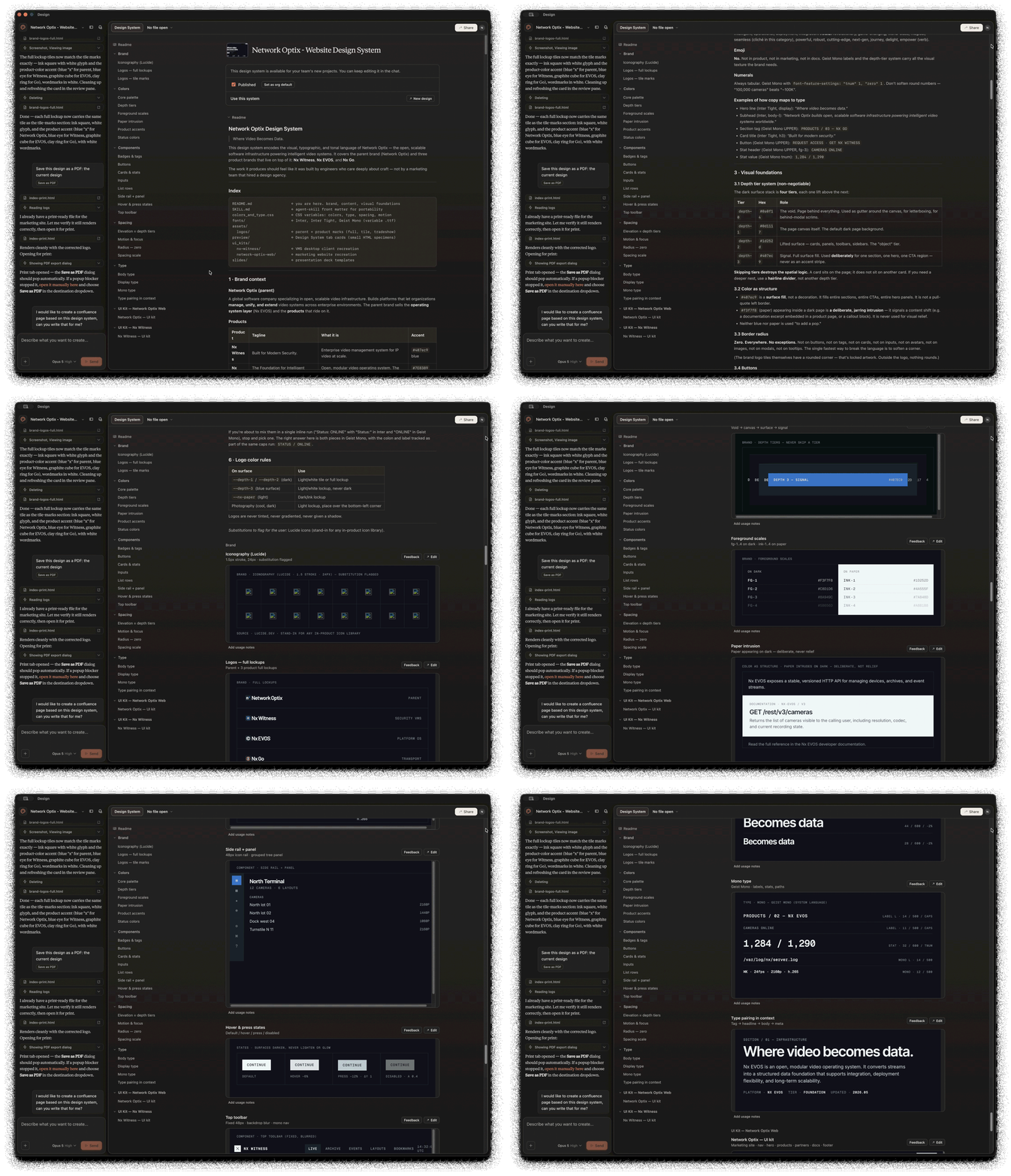
Brand Specification & Tokens
Converted the brand system into structured JSON and design tokens, color logic, type scale, layout rules, the same rules a designer would apply by eye, written down in a format software can actually read. That distinction matters: a PDF style guide can be interpreted differently by everyone who opens it. A token system can't be misread, it's either followed or it fails to compile. I optimized the tokens themselves for size, not just structure, since every API call downstream pays for every token in context, and a bloated spec means slower, more expensive generation on every single output. This became the single source of truth every downstream tool in the pipeline executes against.
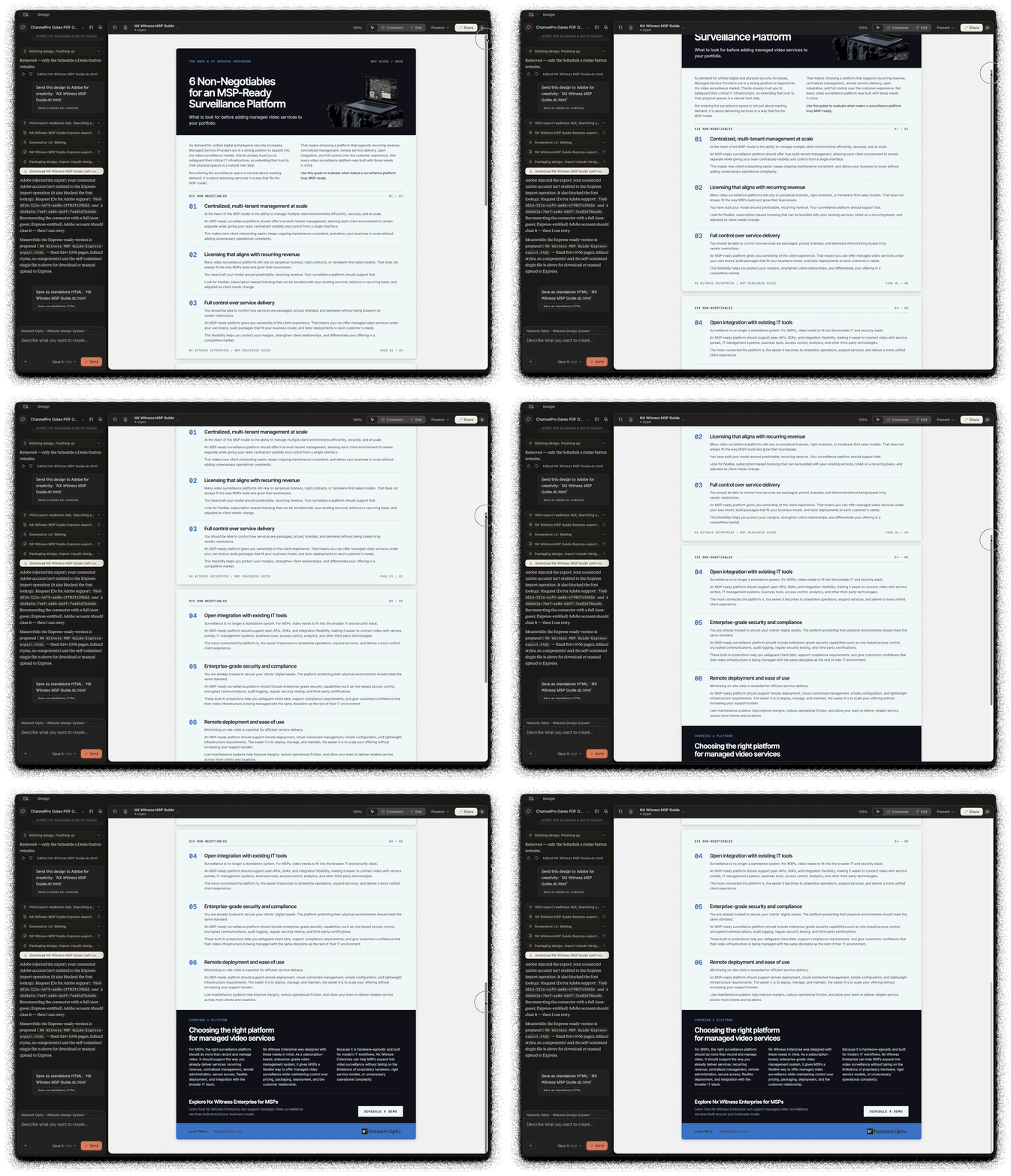
Print & Document Generation, On-brand by default
Built a Claude skill that reads the token system directly and generates print-ready documents from it, no separate design pass required. Print has its own constraints that a screen-first brand system doesn't naturally account for, bleed, margins, page breaks, so the skill layers print-specific formatting on top of the base tokens rather than fighting them. The output of a single prompt is a full whitepaper, already laid out, already on-brand, ready to send to a printer.
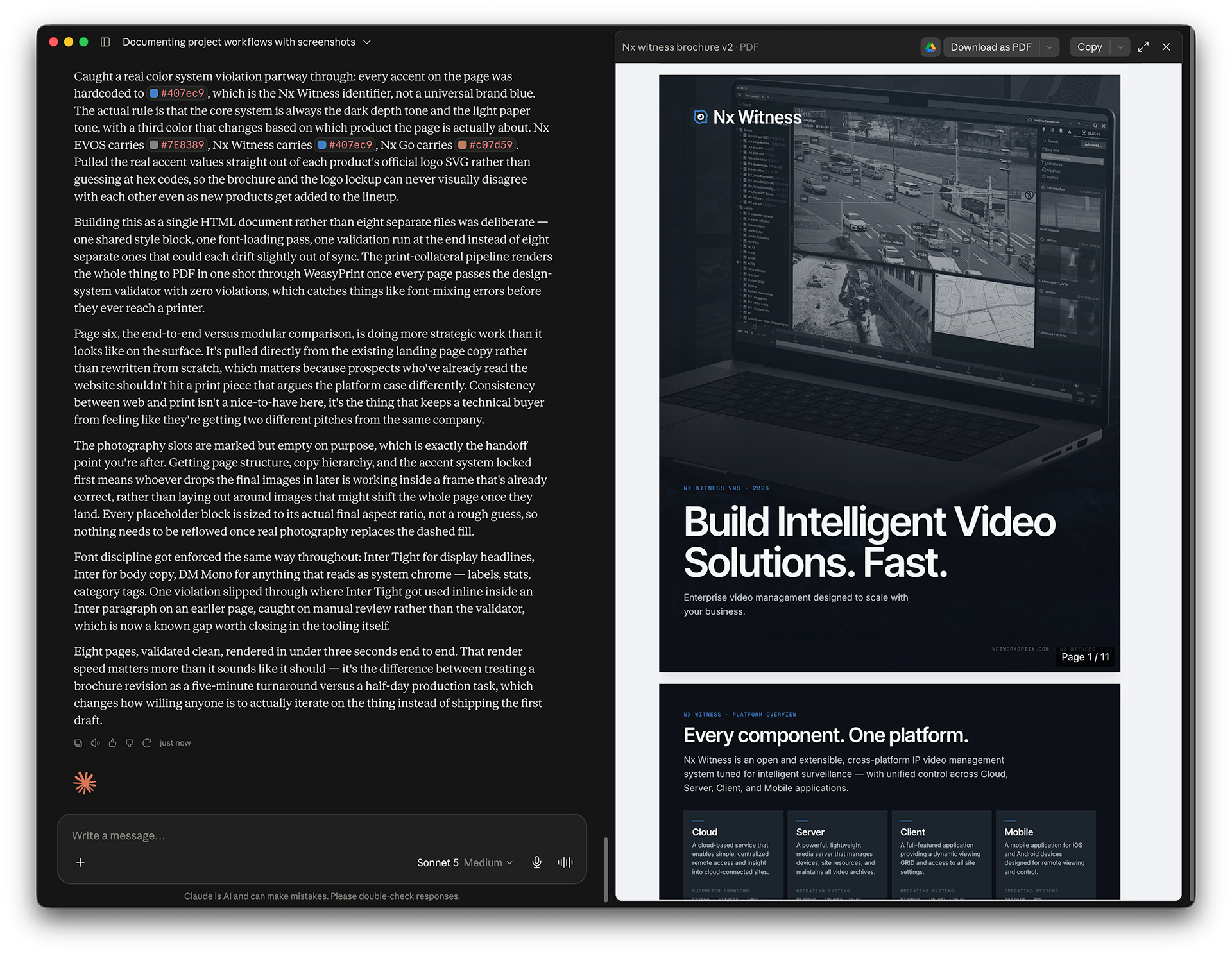
Brochure Production
The real test of any system is whether it holds up past a proof of concept. Combining the design system, the print skill, and an API call into the internal documentation hub, the same pipeline generated a complete eleven-page brochure, fully laid out and brand-compliant, with no manual assembly at any stage. Longer document, same process, zero additional design hours.
Competitive Intelligence
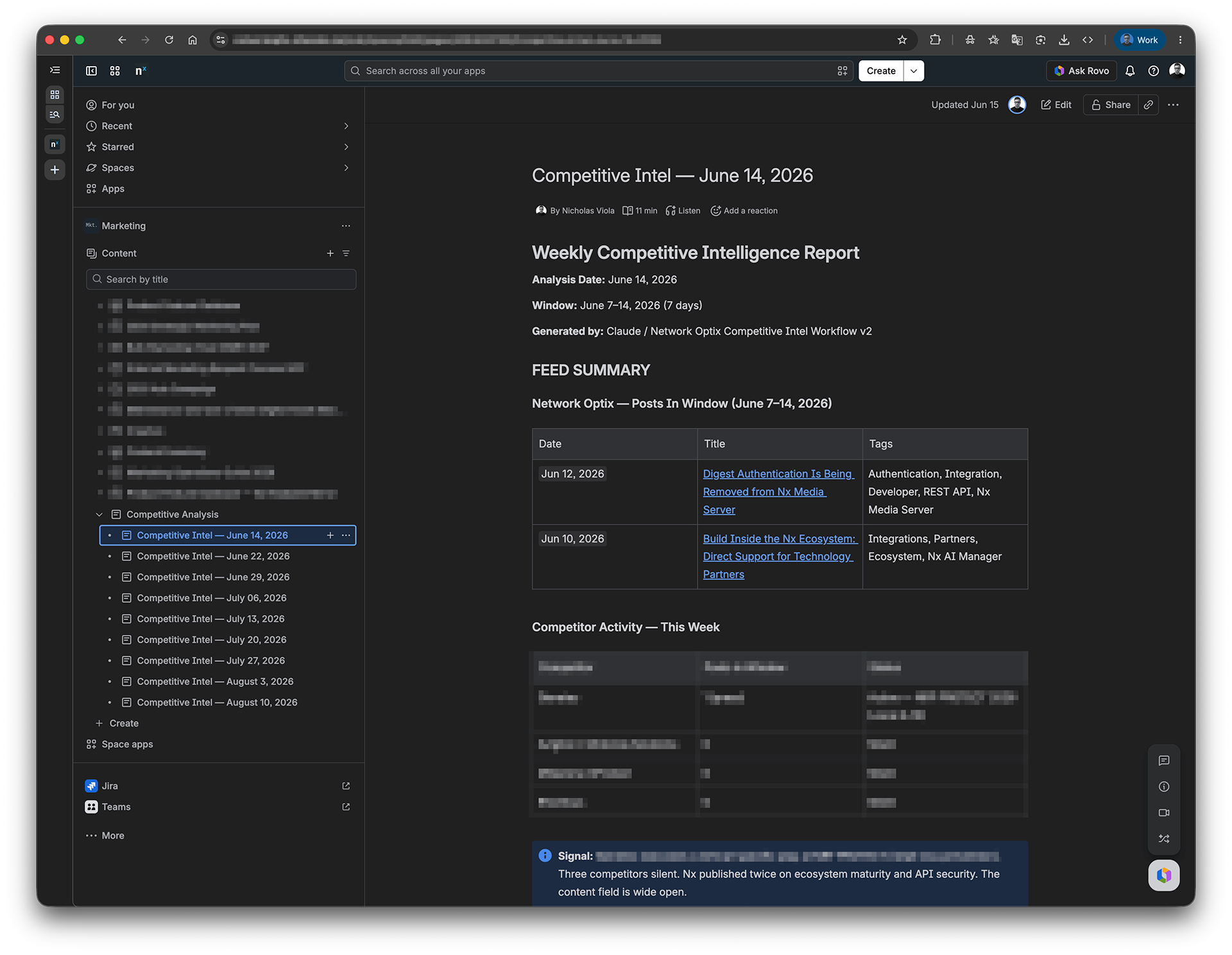
The same infrastructure now runs a recurring job, not a one-time build. Every week, a Claude automation gathers competitive intelligence and turns it into five blog posts, five LinkedIn posts, and a written recommendation for how to respond when a competitor makes a claim or a move worth countering. Work that used to take a creative director two to six hours per task now runs in seconds, with no increase in headcount to support it.
A Note on Where the Line Actually Sits
This isn't a case for replacing creative judgment with automation. It's the opposite: every decision embedded in that token system, what counts as on-brand, where the line sits between progress and inconsistency, still required someone who could make that call in the first place. The system doesn't think for me. It just means I only have to make each decision once.
The goal was never to automate creativity. It was to automate the work that was never creative to begin with, the specs, the facts, the numbers that close a deal on their own merit. A whitepaper doesn't need a bold idea. It needs to be accurate, on-brand, and on someone's desk by end of day. That's the work the system was built to take off my plate.
But the line between mechanical and creative isn't always where you'd guess it is. Early in building the brochure pipeline, the system started generating full-page hero images for each product section, cloud, desktop, mobile. They looked genuinely good. They also would have doubled the print run's page count and cost. Nothing about that output was creatively wrong. It was a production call the system had no way to make on its own, because it didn't know what a print run costs.
I could have fixed that once and moved on. Instead, I built the correction into the system itself: before generating a brochure now, it asks whether the section format should be condensed or full, the same question a junior designer would have asked me at the start of a brief. That's the actual shape of this work.